September 2026 jobs report: Private hiring holds while peak season waits
September 2026 jobs report: Private hiring holds while peak season waits
The latest U.S. labor market data points to a labor market that slowed in September without stalling. The September Employment Situation report from the Bureau of Labor Statistics (BLS) shows a modest gain in payrolls, an unemployment rate that edged up on rounding, and another round of downward revisions to the summer, trends that matter most for employers relying on hourly, frontline labor.
In September, total payrolls rose by 29,000, well short of the roughly 84,000 economists had forecast, while private employers added 46,000. Government payrolls fell by 17,000, mostly at the local level. The unemployment rate rose to 4.2 percent from 4.1 percent, a move the BLS characterized as little changed. Taken together, the numbers describe a private economy still adding jobs at a slow, steady pace, with the usual early signs of holiday peak hiring notably absent.
What the numbers tell us
The private sector figure is the one that matters for anyone staffing hourly work. Health care continued to lead with 17,000 jobs, construction added 11,000, manufacturing added 9,000, and food services and drinking places added 10,800. No major industry moved sharply in either direction, which is a different picture from the narrow, two-industry rebound of August.
Wage growth continued to cool. Average hourly earnings rose 5 cents to $37.81 and are up 3.0 percent over the year. The average workweek held at 34.4 hours. Flat hours and modest wage gains suggest employers are neither stretching existing staff nor bidding up pay to win new hires, at least in the national averages.
The unemployment rate deserves context. The increase was a fraction of a tenth of a point that rounded up, and it arrived alongside a rise in labor force participation to 61.8 percent as more people entered the workforce. That is a labor force growing at the margin, not a wave of layoffs.
July and August were revised down by 60,000 combined
The BLS revised July's change from a gain of 21,000 to a loss of 10,000, and August's from 162,000 to 133,000, a combined 60,000 fewer jobs than previously reported. July has now flipped twice, from an initial loss to a gain and back to a loss, which says more about the reliability of early estimates than about the economy itself.
The first print of any month is the least reliable number in the report, and staffing plans built on a single headline carry more risk than plans built on a trend.
What this means for warehousing and logistics teams
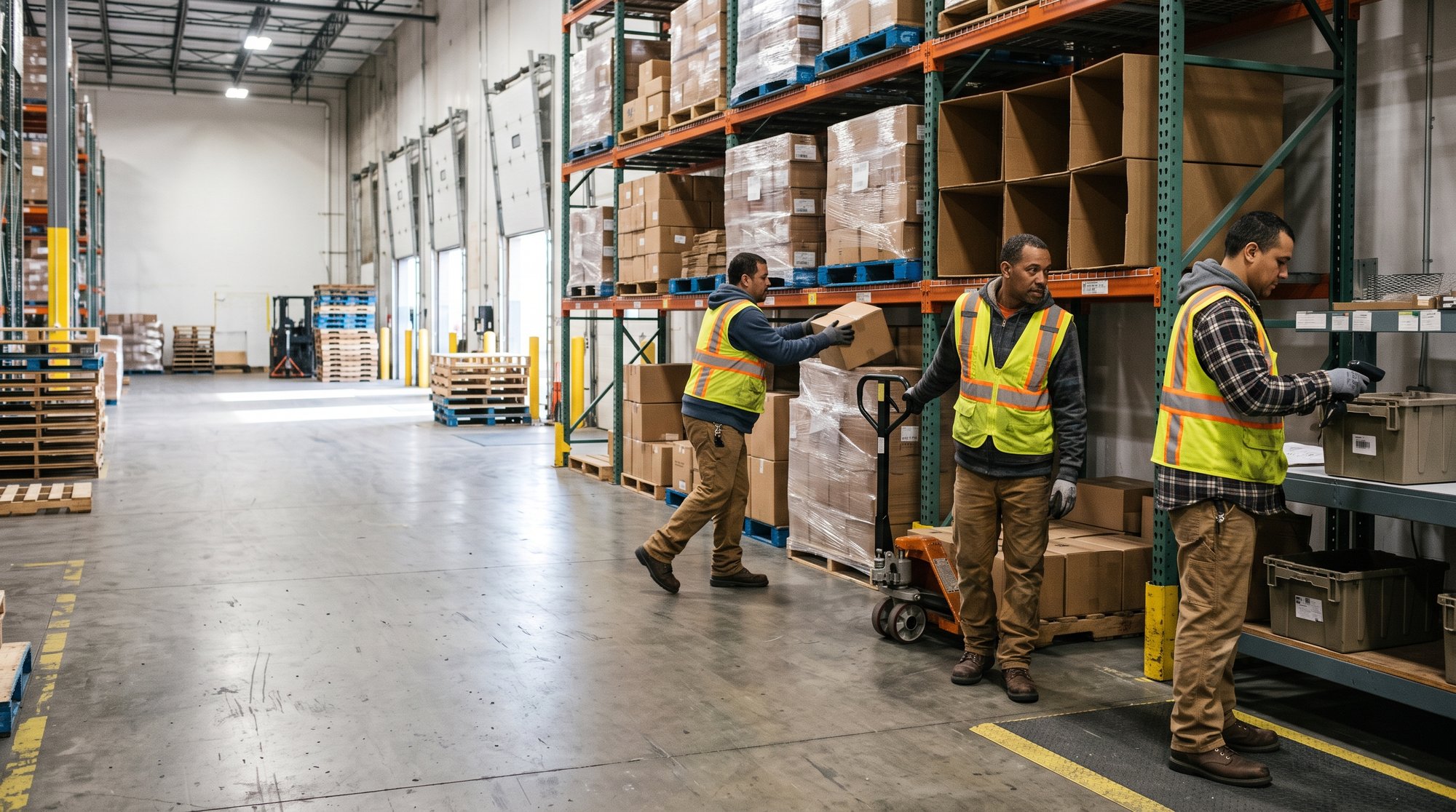
Transportation and warehousing added 7,600 jobs, but warehousing and storage lost 4,100 after losing 2,600 in August and is now down 21,600 from a year earlier. Couriers and messengers were essentially flat, and truck transportation added 2,600. Temporary help services, often an early read on peak staffing, lost 10,900 jobs in September, though the industry remains up 15,200 over the year.
For warehouse and logistics leaders, fixed fulfillment capacity is entering the fourth quarter thinner than it was a year ago, and the seasonal staffing build has not yet shown up in the data. When volume lands, that gap tends to be filled at short notice and at a premium.
What this means for retail and merchandising operators
Retail trade added 5,800 jobs in September, but large-format stores went the other way. General merchandise retailers cut 4,800 positions, including 4,100 at warehouse clubs and supercenters, the same stores that typically lead seasonal hiring. Gasoline stations and home improvement retailers supplied the gains instead.
Outside the payroll data, Challenger, Gray & Christmas reported that announced seasonal hiring plans are running 23 percent below last year, and retail analysts expect stores to carry the holidays with fewer temporary workers. For retail and merchandising operators, that points to lean permanent rosters into peak and heavier reliance on flexible coverage once traffic arrives.
What this means for hospitality and events employers
Leisure and hospitality added 10,000 jobs in September, led by food services and drinking places at 10,800. Performing arts and spectator sports added 6,700, while accommodation lost 3,600 and amusement, gambling, and recreation lost 3,100. After August's outsized restaurant gain, September's pace sits much closer to the sector's longer-run trend.
For restaurants, hotels, and event operators, that reads as demand holding rather than surging into the fall.
Why this report matters for hourly workforce planning
Across warehousing, retail, and hospitality, September's data describes employers that are cautious rather than cutting. Private payrolls grew and wages and hours held steady, but a balanced national picture can mask tight regional and sector markets, particularly in fast-growing industrial corridors. Timing adds to the risk, since seasonal commitments are arriving later and smaller than usual.
That creates a familiar risk. Holiday demand that outruns a lean roster shows up as unfilled shifts, overtime, and missed service levels. Operators who line up flexible capacity now, before local labor pools tighten further, will have more room to respond than those who wait for November.
Looking ahead
September's report describes a private labor market still growing slowly and steadily, with the usual signs of peak season hiring yet to appear. The October jobs report, due out November 6th, will show whether retailers and warehouses begin their seasonal build or continue to hold back.
For warehousing, retail, and hospitality teams alike, the months ahead will reward flexibility. The ability to adjust staffing quickly, respond to industry-specific demand shifts, and meet workers where they are will define who stays resilient through the holiday peak.

